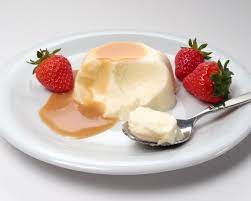

Creme Bavarois (Bavarian Cream)

A decadent, classic French dessert that is both light and airy, yet firm and structured. A rich, silky vanilla Crème Anglaise base is stabilized with gelatin and gently folded with lightly whipped cream. Perfect unmolded as a standalone plated dessert or used as an elegant filling for charlottes, entremets, and tarts.

Printable PDF

  • Prep Time:

    30 minutes

  • Bake/Cook Time:

    10 minutes

  • Chill/Set Time:

    4 hours (or overnight)

  • Servings:

    ~600 g / 2.5 cups (4 to 6 servings)
  • Materials

    Heavy-bottom saucepan
    Heatproof mixing bowls
    Balloon hand whisk
    Fine-mesh sieve
    Silicone spatula
    Instant-read digital thermometer
    Stand mixer with whisk attachment (or hand mixer)
    Individual silicone molds, ramekins, or dessert glasses

  • Prep

    Separate eggs while cold, then allow yolks to come to room temperature.

    Chill heavy cream, mixing bowl, and whisk attachment in the freezer for 15–30 minutes prior to whipping.

    Wipe down the chilled bowl and whisk before whipping to remove any condensation.

    Measure and assemble all remaining ingredients and equipment (mise en place).

  • Oven/Stove

  • Shopping List

    Eggs
    Whole Milk
    Heavy Cream
    Vanilla
    Granulated Sugar
    Gelatin
    Powder
    Confectioner’s Sugar

  • Crème Anglaise Base

    120 ml Whole Milk (1/2 cup)
    120 ml Heavy Cream (1/2 cup)
    1 Vanilla Bean, split and scraped (or 1.5 tsp vanilla bean paste)
    60 g Egg Yolks (~3 to 4 large yolks)
    50 g Granulated Sugar (1/4 cup)
    1 pinch Fine Sea Salt

  • Gelatin Bloom

    6 g Powdered Gelatin (approx. 2 tsp)
    30 ml Cold Water (2 tbsp)

  • Whipped Cream Fold

    240 ml Heavy Cream, chilled (1 cup)
    30 g Confectioners’ Sugar (1/4 cup)
    1 tsp Pure Vanilla Extract

  • Bavarian Cream

    Custard (stabilized with gelatin)
    Whipped Cream

  • Crème Anglaise Base

    STEP 1: HEAT THE DAIRY & VANILLA
    In a heavy-bottom saucepan, combine whole milk, 120 ml heavy cream, and the scraped vanilla seeds and pod (or vanilla paste). Warm over medium-low heat until steaming and small bubbles appear around the rim (do not boil). Remove from heat and let infuse for 10 minutes.

    STEP 2: WHISK YOLKS AND SUGAR
    In a medium bowl, whisk egg yolks, granulated sugar, and salt together vigorously until pale and slightly thickened.

    STEP 3: TEMPER AND COOK THE ANGLAISE
    Gradually drizzle about one-third of the hot milk mixture into the egg yolks while whisking constantly to temper. Pour the tempered mixture back into the saucepan. Cook over medium-low heat, stirring continuously with a heatproof spatula or wooden spoon, scraping the bottom and sides. Cook until the custard thickens slightly, coats the back of a spoon (nappe), and reaches 175°F–180°F (80°C–82°C). Immediately remove from heat. Do not let it boil.

    STEP 4: INCORPORATE GELATIN & STRAIN
    Immediately add the bloomed gelatin to the hot custard and stir until completely melted and dissolved. Pour the custard through a fine-mesh sieve into a clean bowl to ensure absolute silkiness and remove any stray cooked egg or vanilla pod fibers.

    STEP 5: COOL TO SEMI-GEL STATE
    Place the bowl over an ice-water bath and stir gently until cooled to room temperature (about 68°F–72°F / 20°C–22°C). The custard should thicken to the consistency of heavy cream or raw egg whites, but must not be cold enough to set stiff. Remove from the ice bath.

  • Gelatin Bloom

    BLOOM THE GELATIN
    In a small bowl, sprinkle the powdered gelatin evenly over the 30 ml cold water. Let stand for 5 to 10 minutes until fully hydrated and spongy.

  • Whipped Cream Fold

    STEP 1: WHIP THE CREAM
    In a chilled bowl with chilled beaters, whip the 240 ml heavy cream with confectioners’ sugar and vanilla extract until it reaches soft-to-medium peaks. (Do not overwhip to stiff peaks, or it will curdle and make folding difficult).

    STEP 2: FOLD & ASSEMBLE
    Whisk about one-third of the whipped cream into the cooled custard to lighten it. Then, gently fold in the remaining whipped cream with a silicone spatula in two additions, using broad, gentle folding motions until smooth, uniform, and airy.

  • Bavarian Cream

    MOLD AND CHILL
    Immediately pour or pipe the Bavarian cream into dessert coupes, silicone molds, or cake rings. Chill in the refrigerator for at least 4 hours (or overnight) until fully set and firm.

Notes

TEMPERATURE RULE
If the custard is too warm when folding, it will melt the whipped cream; if it is too cold, the gelatin will set into tiny rubbery lumps. Both must meet at cool room temperature.

FLAVORING
For a little pizzaz add almond extract, espresso, or brandy, Grand Marnier, or rum.

COLORING
Bavarian cream is served natural color.

DECORATING
Garnish a solo dessert with berries, nuts, or chocolate and mint leaves.

PAIRING
Bavarian cream works well with chocolate, caramel, coffee, liqueurs, and berry flavors.

SERVING
Unmold onto chilled dessert plates and serve with fresh berries, raspberry coulis, or salted caramel sauce.

STORING
Store chilled under airtight cover for up to 3 days. Do not freeze molded creams as gelatin-based dairy will weep upon thawing.

VANILLA
Vanilla Paste or extract doesn’t need to infuse, just mix it in.If using a vanilla bean, remove the vanilla pod once the milk is infused and keep it to make homemade vanilla extract.

CUSTARD
Don't let the custard mixture boil. When it just starts to bubble, turn down the heat. If it boils the he eggs will curdle and the custard will turn grainy or lumpy. 

TESTING THE CUSTARD
The custard is ready when it reaches 180F/80CIt is also ready when it coats the back of a wooden spoon. Draw a line through the custard on the back of the spoon and tip the spoon down. If the line stays clear, it is ready.

CUSTARD + GELATIN+ WHIPPED CREAM
If you leave the custard in the fridge for too long, it will start to set with the gelatin. You want to be room temp so it doesn’t melt the whipped cream, but it cannot be even slightly cold because the gelatin will set too much.

If the custard has started to set, vigorously whisk it to loosen it.

If it has completely set, you can try to blend it on slow with an immersion blender.

It is best not to let this happen. Time the making of the whipped cream with the custard cooling so that when the whipped cream reaches still peak the custard is at room temp.

To do this let the custard come to room temp, covered, on the countertop then make the whipped cream (with ice cold cream and utensils) and fold it into the custard.
